




home     about us     for players     news     links     forum     store contact     advertise     event planners

The PokerCoaching.com Forum has reopened join the discussions now!!

Free Shipping 468x60banner

Welcome to PokerCoaching.com


Photo courtesy SNGIcons.com

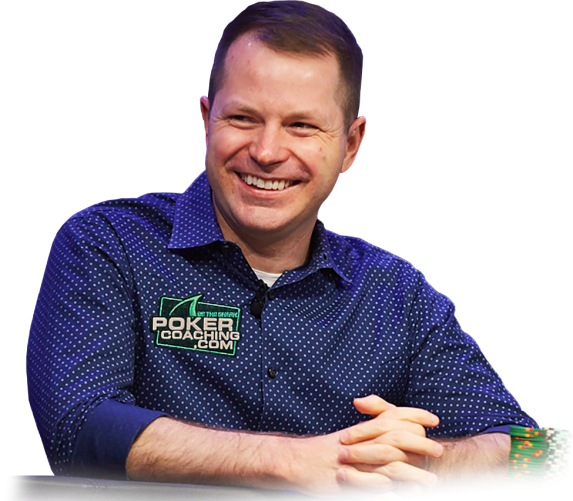
CONGRATULATIONS TO POKERCOACHING STUDENT JOHNATHON LITTLE aka jcardshark and student of PokerCoaching.com’s Bill Seymour. He won $1, 065, 000 and the opening season event of the WPT, the 2007 Mirage Poker Showdown in Las Vegas. Jonathon had to overcome veteran pros like Phil Ivey (an early student of Bill Seymour’s as well) to win this prestigious event.

That makes an incredible 7 final tables and 17 cashes in big tourny live play since January 2006. To say nothing of his incredible success online

Jonathan now sits 2nd in CardPlayer Magazines Player of the Year standings with 3306 points and over $1.6 million in winnings this year!!

Johnathon has been a student of Bill Seymour for the last 18 months. Johnathon called Bill for advice when they reached the final two tables, then again with 9 players, and then when he reached the T.V. table of six.

He played brillantly, and took advantage of his chips. We're incredibly proud of Jonathon, and his acomplishments. His success lends to the srenghth of learning to play correctly, which as many of you well know is what we teach.

Who is going to be our next champion? MAYBE YOU!

New Articles

We will be posting new articles here regularly from syndicated columnist Steve Larson. Please visit the links within the articles for valuable sponsers that keep these wonderful articles free

Short handed poker

In order to be a winning poker player, you must be a good or at least reasonable short- handed poker player. Short-handed play comes about when there are 5 or less people left around your table. If you notice that one of these guys suddenly turns into a maniac and starts betting and raising, you’ll know the short-handed frenzy has begun.

There is one word that can accurately describe the ideal short handed poker strategy that you have to adopt: aggression.

If playing short handed is not something that you like or you’re good at, you’d better improve fast because: in any online poker room, the real money to be made is in tournaments. Whether it’s MTTs or STTs we’re talking about, one thing is certain: without short handed skills, you’ll never win a tournament, after all, that’s what things always come down to. Read around the internet a bit, check out some poker articles and see what they all say about this matter.

Whenever a game turns into a short handed one, several things happen: First off all, the speed picks up. You need to focus better, and if you’re playing at several tables at once, you might want to consider putting the others on hold. Since the game is faster, any mistake that you make will have far a far bigger effect. It is possible you’re the chip leader in one hand, and 2 hands later you find yourself eliminated.

Because there are fewer players around the table, which in turn leads to fewer pocket hands dealt, the possibilities of one (or more) players hitting a monster, will plummet. As a consequence, your starting hand standards should be lowered as well. You might want to consider seeing the flop on hands you’d never have considered had you been in a full game, because in short handed poker, hands are often won on as little as a high-card. If you happen to hit a high pair on the flop, by all means, do try to take the pot down on it.

Another thing that comes into play, is the aggression. Aggression is absolutely necessary for three reasons: 1) short handed poker is a dog-eat-dog game. If you don’t eat your opponent (figuratively speaking of course) he’ll eat you. If you don’t attack, you’ll be attacked, and we all know, the best defense is in fact attack itself.

2) In the late stages of a tourney, (when short handed poker comes into play) the bigger bankroll will not only mean that its owner can play more relaxed. It’ll become a lethal weapon against the hopelessly under-stacked opposition.

I hope you know the odds involved in going “all-in” in a tournament. They’re not exactly favorable for the guy going all-in, unless he has something like 90-10 odds in his favor. By having superior stack, you can force him into the all-in situation time and again or make him fold. Folding will kill him. So will going all-in, as there’s no way he’ll have 90-10 chances working for him all the time. In a word, you force him to pick his own poison and then exit stage left.

3) In the late stages of a tournament, the blinds will have become so big, that they’ll be a threat to a weaker stack by themselves. That means, our guy needs to act. In short handed poker, if you wait around for good starting hands, you lose. If you don’t move, you die. It’s simple as that.

The problem with skillful short-handed play is that nobody is born with the skill. It takes hard work, dedication and a bit of fanaticism to reach a competitive level as far as short handed poker is concerned.

One of the best ways to learn good short-handed techniques is to play in heads-up tournaments. Not only will you get a great training-course in what it means to be a good short-handed player, you’ll also make some good money. After all, if you manage to best just one guy in these tourneys, you double up your buy-in.

top

To slowplay or not to slowplay


One of the most fundamental dilemmas you’ll be faced with in poker – whether you’re playing online or offline – is how to exploit the good hands that you get from time to time, to the maximum.

After all, that is what winning poker really comes down to: minimizing your losses on hands that you do not win on, and maximizing the gains on hands that you win.

One common practice meant to help build up a nice pot whenever you’re on a good hand, is slowplaying. The player who has the “monster”, limps along calling and checking, pretending that he doesn’t really have anything worthy of seeing the showdown on. That way, his opponents will believe they can bluff him out of the pot, or they’ll assess that they can take the pot on a much weaker hand than his.

The question is, just how efficient is slowplaying a monster?

Some consider it a somewhat “dated” technique, and they argue that it is expected of a player with a monster in the pocket to slowplay, thus it will fail to attract any more value into the pot.

If you do happen upon a nice hand, it’s better for you to act aggressive on it. Not only will the aggressive play further improve your odds, but it will also provide more money in the pot, and it’ll supposedly keep the others from reading you.

Well, this is a nice theory, but things are usually very difficult to summarize in online poker. Everything depends on a whole set of other factors, and there is a web-like interdependency between the different aspects of the game, so it’s very difficult to dress things up into black and white.

Whether your slowplaying will work or not, depends on quite a few things: first of all, the style of play you’ve shown your opponents previously. Assuming that you’re mostly a very tight and passive player, betting all out, all of the sudden, is certainly going to ring an alarm bell for the other players. So, there goes the theory about acting aggressive to “double-bluff”. On the other hand, if you’re an aggressive player, and loose too on top of that, you definitely don’t want to slowplay your monster. In a word: you shouldn’t ever do anything that will seem out of the ordinary for the other players. If you have a loose-aggressive image, stick to it. If you’re tight, stick to slowplaying. Poker is about successfully manipulating your opponents, so in that respect, you definitely want to keep a lid on what you have in the pocket. Just play it as you usually play, and that will work fine. When you get right up to the last betting round, then you can start to bet into it like there’s no tomorrow. With not many chances for betting left, you don’t risk losing value from the pot, and in the same time, the possibility that someone will call your outrageous bet will still be there.

Another thing that you have to consider when deciding to slowplay or not, is the relative value of your hand. You can read to board and make assessments of what the others might be holding, and you can quickly figure out approximate odds for a worst-case scenario. If there are 4 cards to a flush on the table, and you have the K to that flush, you can still be beaten by someone who has the A, but the odds are stacked in your favor, so you can’t really lose there.

If you feel confident in the strength of your hand, you may want to slowplay it (if all other factors tell you that you should, of course), however, if you think your hand might be beaten, giving the others more cards might not be the best choice. In that case, you’ll obviously try to force them to fold.

Last, but certainly not least, there’s the matter of the reads you get on your opponents. Those too will greatly influence your decision to slowplay a hand or not to.

top

Smarthome, Inc.


Navigate home     about us     for players     news     links     forum     poker store NEW!     contact     advertise     event planners